The UK’s hydrogen industry has issued an urgent call for coordinated cross-ministerial intervention to prevent further damaging delays to the Government’s Hydrogen Allocation Rounds and the long-awaited Hydrogen Strategy refresh.
In a joint letter sent to the Secretaries of State and the Chancellor, the Hydrogen Energy Association (HEA), on behalf of the sector, warns that continued uncertainty is already eroding business confidence, stalling investment decisions and putting high-value UK jobs at risk.
The HEA is calling for the immediate publication of HAR 2 project outcomes, the HAR 3 market engagement exercise, and rapid progression of the Hydrogen Strategy Refresh, arguing that the UK risks falling behind international competitors at a critical moment for the global hydrogen economy.
Dr Emma Guthrie, CEO of the Hydrogen Energy Association, said: “The UK hydrogen sector is ready to invest, build and deliver – but it cannot do so in a policy vacuum.
“Every day of delay to HAR 2, HAR 3 and the Hydrogen Strategy refresh chips away at investor confidence, pushes projects, capital and skilled jobs elsewhere and risks a negative spiral of eroding business confidence.
“This is not about bureaucracy – it is about whether the UK chooses to lead or to watch opportunities drift offshore. The industry needs clarity now.
“Cross-ministerial coordination is essential to unlock private investment, protect UK jobs and keep hydrogen on track to play its role in growth, energy security and decarbonisation.”
The HEA has also submitted a package of industry case studies to Government, demonstrating the scale of investment and job creation already at risk as a result of prolonged policy uncertainty.
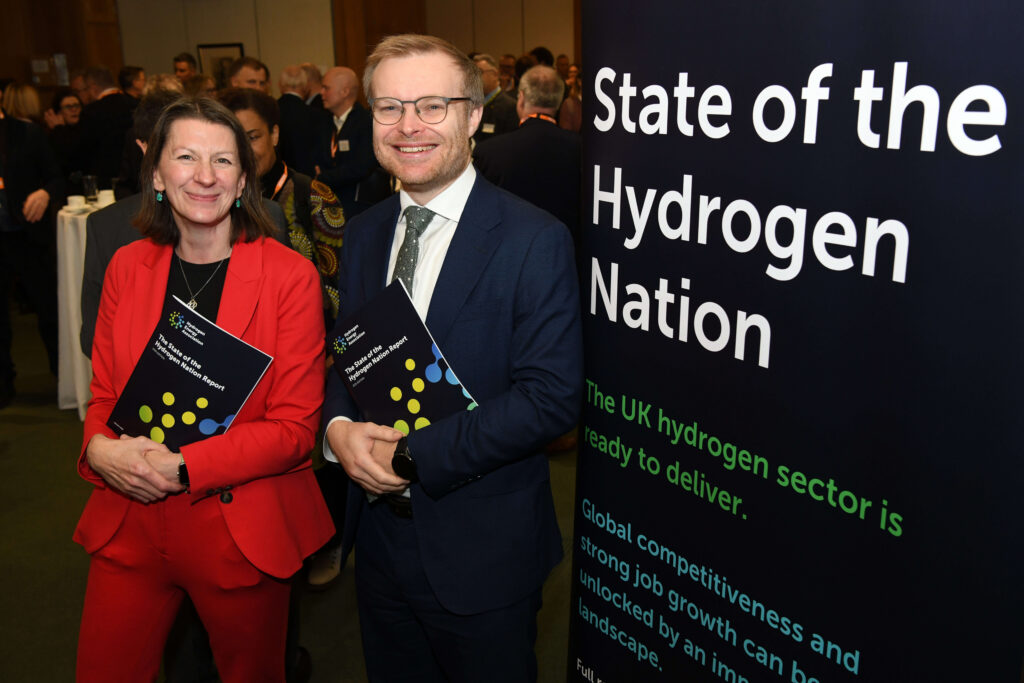
These examples build on evidence in the Association’s recently published State of the Hydrogen Nation report, which highlights the economic potential of the sector under a supportive and stable policy framework.
Under an improved delivery environment – with faster decision-making, clearer demand signals and better alignment across departments – industry respondents to the HEA survey indicate the sector could support a four-fold increase in employment, creating around 17,000 UK hydrogen jobs by 2030, spanning engineering, construction, manufacturing, infrastructure and operations.
The HEA warns that failure to act swiftly risks a “negative spiral” of delayed final investment decisions, project cancellations and international investors prioritising markets with greater policy certainty.
Dr Guthrie added: “Hydrogen is not a future opportunity – it is a present one.
“The UK has the capability, the projects and the people. What is missing is pace and coordination.
“The window to lead the global hydrogen economy is still open, but it is closing. Government action in the coming weeks will determine whether the UK captures this opportunity or cedes ground to competitors.”
The Hydrogen Energy Association says it stands ready to work with Government to accelerate delivery of HAR 2 and HAR 3 and to support the finalisation of the Hydrogen Strategy Refresh, ensuring the UK can fully realise hydrogen’s contribution to economic growth, energy resilience and net zero.